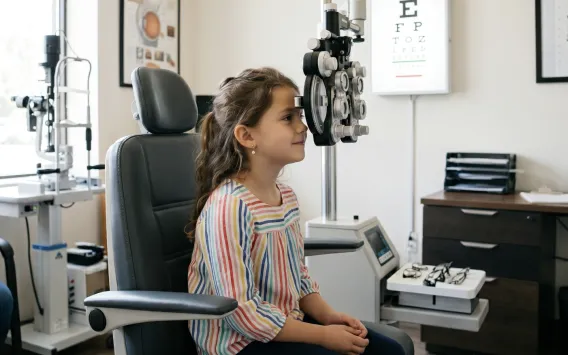
Beyond 20/20: What Your Eye Exam Can Reveal About Your Eye Health
Seeing 20/20 is useful, but it tells only part of the story. A person can read the smallest line on an eye chart and still have an eye condition developing quietly in the background.

That is why a comprehensive eye exam at York Eye Associates goes beyond updating glasses or contact lenses. Your eye doctor evaluates how well you see, how your eyes work together, and the health of structures such as the cornea, lens, retina, macula, and optic nerve.
Why Eye Disease Can Be Easy to Miss
Many eye diseases develop gradually. The brain is remarkably good at adapting to small changes, and one eye may compensate for the other. By the time symptoms become obvious, an eye condition may already be more advanced.
Regular exams create a baseline and make it easier to notice changes over time, especially as age, family history, medications, or medical conditions alter your risk.
Glaucoma Can Progress Without Obvious Early Symptoms
Glaucoma is a group of diseases that damage the optic nerve. In many cases, peripheral vision changes occur slowly enough that a patient does not notice them at first.
Eye pressure is one part of a glaucoma evaluation, but it is not the entire picture. Your doctor may also assess the optic nerve and, when indicated, use visual field testing or imaging to look for suspicious structural or functional changes.
The Retina Can Reflect More Than Vision
The retina is the light-sensitive tissue lining the back of the eye. Changes in retinal blood vessels can be associated with diabetes, high blood pressure, and other systemic conditions. The macula at the center of the retina can also show early changes associated with age-related macular degeneration.
Retinal evaluation and imaging allow your eye doctor to document what the back of the eye looks like today and compare it with future visits when needed.
Cataracts Are Not the Only Reason Vision Changes With Age
Cataracts are common as the natural lens becomes cloudy, but blurred vision can also be caused by dry eye, retinal disease, prescription changes, corneal problems, or other conditions.
A comprehensive exam helps separate normal age-related changes from issues that deserve closer monitoring or treatment.
Your Medical History Matters to Your Eye Doctor
Tell your eye doctor about diabetes, high blood pressure, autoimmune conditions, thyroid disease, migraines, previous eye injuries, and medications. These details can influence what your doctor looks for and how frequently your eyes should be monitored.
Make Prevention Part of Your Vision Plan
You do not need to wait until your eyesight feels different to schedule an exam. Preventive eye care is most valuable when it identifies changes before they become disruptive.
Schedule a comprehensive eye exam with York Eye Associates in Gainesville to establish a baseline, monitor long-term eye health, and make sure your vision care goes beyond the eye chart.
Frequently Asked Questions
Do I need an eye exam if my glasses still work?
Yes. A stable prescription does not rule out changes in eye health. Comprehensive exams evaluate much more than whether your glasses remain clear.
Can an eye exam detect health problems outside the eye?
An eye exam can sometimes reveal changes that are associated with systemic conditions such as diabetes or high blood pressure. Your eye doctor may recommend follow-up with your medical provider when findings warrant it.
How often should adults have comprehensive eye exams?
The ideal schedule depends on age, prescription, symptoms, family history, medical conditions, and previous findings. Your eye doctor can recommend an interval appropriate for you.
Is retinal imaging the same as a dilated exam?
No. They can provide complementary information. Your eye doctor will determine which examination methods and imaging are appropriate based on your individual needs.