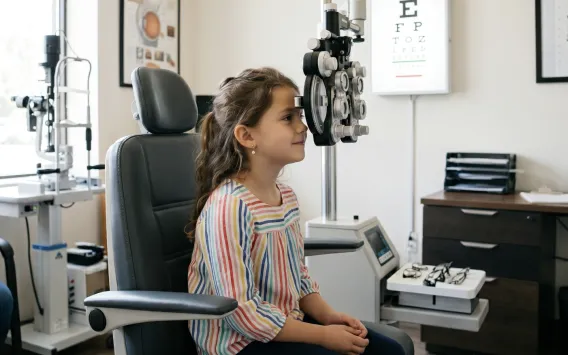
When Eye Drops Aren’t Enough: A More Advanced Approach to Chronic Dry Eye
Artificial tears can be helpful, but they are not always enough. If burning, grittiness, watery eyes, redness, or fluctuating vision returns day after day, repeated lubrication may be treating the symptom without addressing the reason your tear film is unstable.
Specialty dry-eye care at York Eye Associates focuses on identifying what is disrupting the ocular surface and building a treatment plan around those findings.
Why Dry Eye Can Keep Returning
Healthy tears need the right balance of aqueous fluid, mucus, and protective oils. When the meibomian glands along the eyelids become blocked or dysfunctional, the oil layer becomes inadequate and tears evaporate too quickly.
Inflammation, incomplete blinking, eyelid debris, medications, screen habits, contact lenses, and environmental factors can further destabilize the tear film. For many patients, more than one issue is present.
Diagnosis Should Guide Treatment
A specialty evaluation may look at tear quality, eyelid health, the meibomian glands, blinking, inflammation, and the surface of the cornea. This helps distinguish primarily evaporative dry eye from aqueous deficiency or mixed disease.
Treatment can then be selected with a specific target in mind rather than simply adding another bottle of drops.
How Light-Based Therapy Fits Into Dry Eye Care
Low-level light therapy uses controlled light energy around the eyelids to support cellular function and reduce factors that contribute to chronic ocular surface inflammation. York Eye Associates currently offers iLight LLLT Pro as a non-invasive option for appropriate dry-eye patients.
Treatment is designed to complement the rest of the dry-eye plan rather than function as a universal solution for every patient.
Eyelid Treatment Can Matter Just as Much as Eye Drops
Meibomian glands sit within the eyelids, so treating lid function can be an important part of improving tear stability. In-office or device-assisted eyelid treatments can help address debris and gland-related problems that home care may not fully resolve.
York Eye Associates also uses NuLids Pro within selected dry-eye treatment plans, alongside other therapies when appropriate.
Nutrition and Home Care Still Have a Role
Advanced treatment does not make daily habits irrelevant. Consistent home care, appropriate lubricants, hydration, screen breaks, and nutritional support may help maintain improvements between visits.
The key difference is that these measures are chosen as part of a larger plan based on your diagnosis.
Chronic Dry Eye Often Requires Maintenance
Dry eye disease can be chronic. The goal is not only to feel better immediately but to improve tear-film stability, protect the ocular surface, and reduce the cycle of repeated flare-ups.
If you are tired of temporary relief, schedule a dry-eye evaluation with York Eye Associates in Gainesville to find out whether advanced therapy should be part of your treatment plan.
Frequently Asked Questions
Why do artificial tears stop helping after a while?
Artificial tears can supplement moisture but may not correct blocked meibomian glands, inflammation, eyelid disease, or another underlying cause of tear-film instability.
What is low-level light therapy for dry eye?
It is a non-invasive treatment that applies specific wavelengths of light around the eyelids. It may be used as part of a broader plan for selected patients with chronic dry eye or meibomian gland dysfunction.
Will I still need home treatment if I have an in-office procedure?
Often yes. Maintenance care can help protect the improvements achieved with office-based treatment.
How do I know which dry-eye treatment I need?
A detailed evaluation is the best starting point because different forms of dry eye respond to different therapies.